


INSIZE Highlights the Continuing Importance of Hardness Testing in Modern Manufacturing
13-02-2026
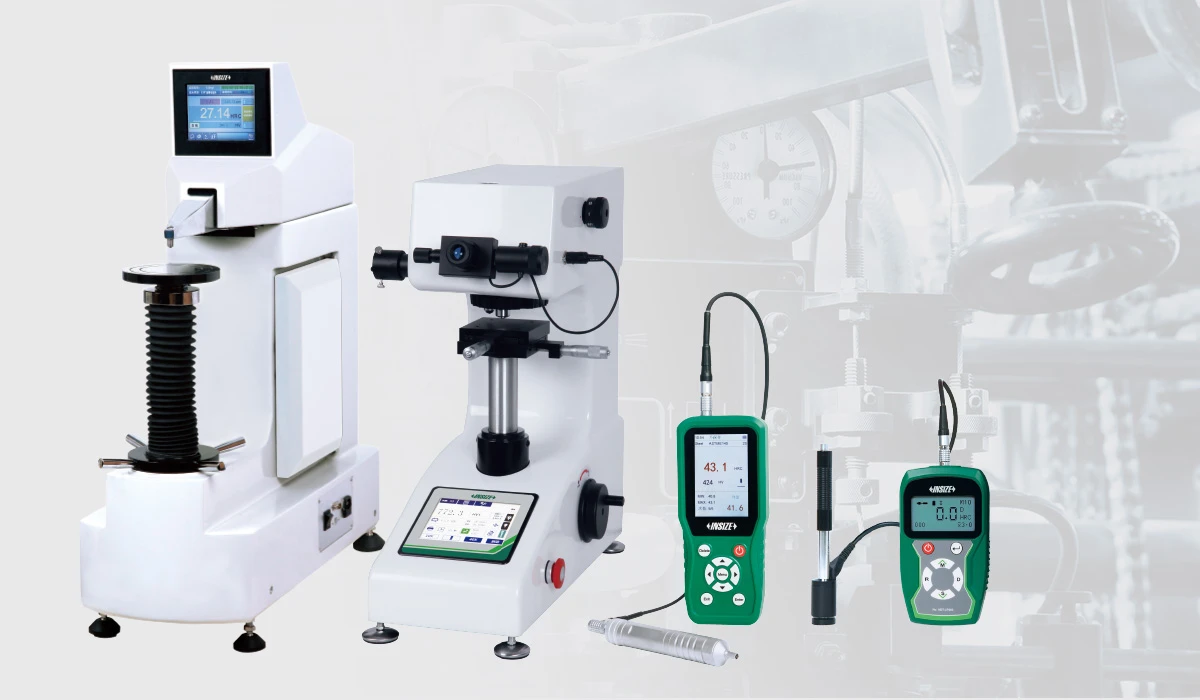
Hardness testing remains one of the most essential measurement processes in modern manufacturing, supporting quality assurance, performance validation and regulatory compliance across a wide range of industries. In sectors such as automotive, aerospace and energy, it provides a fast and reliable way to assess key material properties including strength, wear resistance and ductility. Typical applications range from aircraft landing gear to automotive powertrain components, particularly for heavily loaded parts where safety and product integrity are critical.
As manufacturing technologies evolve, metrology solutions are also being influenced by developments such as artificial intelligence. INSIZE, a global manufacturer of measuring instruments founded in 1995, has integrated AI into its research and development activities. The company operates 16 subsidiaries worldwide and distributes products in more than 120 countries. Its headquarters in Suzhou, China, is home to approximately 200 R&D engineers and a growing portfolio of over 60 patents.
“High levels of innovation are essential to support the critical role of hardness testing at every stage of production,” says John Hogan, Sales Manager for the UK and Ireland at INSIZE. “Manufacturers rely on hardness testing to verify processes such as case hardening and heat treatment, ensuring components like gears, crankshafts and bearings meet specification. The results correlate directly with processes including quenching, tempering and nitriding.”
Hardness testing also plays an important role in research and development environments such as laboratories and universities, offering a fast and quantitative method for evaluating new alloys, coatings and surface treatments. In addition, many industries require compliance with international standards including ISO 6508 (Rockwell), ISO 6507 (Vickers) and ISO 6506 (Brinell), making hardness testing essential for certification and traceability.
Different industries typically adopt hardness scales based on long-established practices. For example, aerospace applications often favour the Vickers scale, while Rockwell and Brinell remain widely used in other manufacturing sectors. Regardless of the method selected, most hardness tests can be completed within a short cycle time, typically around two minutes.

“As manufacturers introduce lighter and more sustainable materials, hardness testing remains fundamental to ensuring these innovations deliver the required mechanical performance,” Hogan adds. “From R&D through production and maintenance, hardness verification is valued for its speed, repeatability and strong correlation with mechanical properties.”
INSIZE offers one of the broadest portfolios of hardness testing solutions on the market, covering all major ISO hardness standards. Its range includes more than 50 models, from manual and semi-automatic systems to fully automatic testers with digital touchscreens. Digital models feature automatic load control, data logging, SPC output and hardness scale conversion to support efficient quality monitoring.
INSIZE hardness testers are designed to balance precision, practicality and ease of use, with solutions available for Brinell, Vickers, Rockwell, UCI, Shore and Leeb testing methods. The range is intended to provide reliable measurement performance while remaining cost-effective for manufacturers and research institutions operating under increasing budget pressure.
Source: GTMA Manufacturing Resource Centre (UK)
Original article published by GTMA: https://www.gtma.co.uk/suppliers/insize-uk/

