

How Are Push-Pull Force Gauges Used in Different Industries?
28-08-2026
A push-pull force gauge is a measurement instrument used to measure the force applied to an object in either tension or compression. By measuring mechanical deformation or converting force into an electrical signal, a force gauge provides a direct way to evaluate the force required to push, pull, insert, remove, open, or break a component.
Because many products and components need to withstand a specific amount of force during use or assembly, push-pull force gauges are widely used for quality control, product testing, assembly verification, and laboratory measurement.
1. Electronics and Electrical Components
In the electronics industry, many components require controlled insertion, removal, or bonding forces.
A push-pull force gauge can be used to measure:
● Connector insertion and withdrawal force
● Push force of switches and buttons
● Force-related tests during battery and electronic product evaluation
These measurements help manufacturers verify assembly quality and product reliability.

2. Packaging, Textile and Light Industry
Packaging materials and textile products also involve many force-related properties.
Typical applications include:
● Yarn tension testing
● Packaging seal strength testing
● Tape and film peel force testing
● Zipper operating force testing
● Paper tensile testing
The measured force can be used to evaluate whether a material or finished product meets its required mechanical performance.
3. Hardware, Machinery and Automotive Components
Mechanical components often need to operate within a specific force range. A force gauge can help evaluate the force required to operate or assemble these components.
Applications include:
● Lock opening force testing
● Spring force testing
● Valve force testing
● Door hinge push force testing
● Seat belt buckle pull force testing
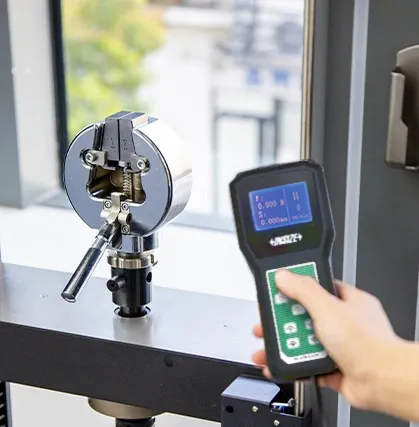
For production inspection, a handheld force gauge can provide a convenient way to perform direct push and pull measurements.
The INSIZE ISF-HF Series, for example, is a standard mechanical force gauge designed for push and pull tests. It supports peak or tracking mode and uses a precision internal design with a metal case.
4. Construction and Building Materials
Force measurement is also used in construction-related component and material testing.
Applications can include:
● Door and window hinge load testing
● Tile adhesion testing
● Small pipe compression testing
The required measurement range depends strongly on the test object and the expected force.
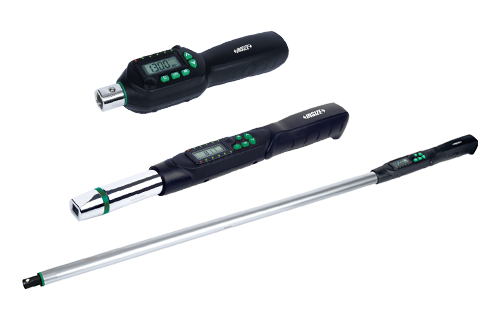
For higher-force applications, a force gauge with an external sensor can be considered. The INSIZE ISF-DF Series Digital Force Gauges (Standard Type) includes models with internal and external sensor configurations and covers different load capacities.
5. Pharmaceutical and Cosmetic Products
Force measurement can also be applied to products where opening, pressing, breaking, or deformation force is important.
Examples include:
● Capsule opening force
● Injection needle pushing force
● Gel hardness-related force testing
● Hair breaking force
● Lipstick breaking force
These tests help evaluate product performance and consistency.
6. Research and Education
Force gauges can also be used as measurement tools in physics experiments and material mechanics testing. They provide a practical way to demonstrate and measure push and pull forces.
How to choose the right force gauge for the application?
The appropriate force gauge depends on several factors:
What force needs to be measured?
Determine whether the application involves tension, compression, insertion, peeling, or destructive testing.
How much force is expected?
Select a suitable measurement range based on the expected maximum force.
How accurate does the measurement need to be?
Higher-precision applications require a force gauge with suitable accuracy and resolution.
Is data recording required?
For applications requiring data analysis, a digital force gauge with memory and data communication functions can be more suitable.
The INSIZE ISF-DF Series provides digital force measurement with peak and tracking modes, tolerance testing, memory, and data transmission to Excel. It also offers multiple force units depending on the sensor type.
Conclusion
From electronic connectors and packaging materials to automotive components and pharmaceutical and cosmetic products, push-pull force gauges can be used wherever controlled force measurement is required.
The key is to match the force gauge to the application, expected force range, accuracy requirement, and data needs. Choosing the appropriate gauge and accessories can make force testing more reliable and easier to perform.